What we miss when we focus only on behaviour

Why helping children understand how they regulate, think and learn changes far more than the next worksheet.
I have sat beside many children who knew exactly what they were supposed to do and still could not begin.
The book was open. The instruction had been given. The work was often well within their ability. From the other side of the classroom, it could look like avoidance, inattention or refusal. Up close, it usually looked different.
Sometimes the child could not find the first step. Sometimes the instruction had arrived as too many pieces at once. Sometimes the room was too loud, the fear of getting it wrong was too big or the effort of holding everything together had already used most of what they had.
The child was not always choosing not to engage. Very often, they did not yet understand what was happening inside them well enough to explain why they could not. That has always been the part that concerned me most.
Children learn very quickly how adults experience them. They know when they are the one who talks too much, starts too slowly, moves too often or needs the instruction repeated. They know when a sigh is about them, when the teacher’s tone changes and when their name is used as shorthand for a problem.
What they are rarely taught is how to understand those experiences for themselves.
A child may know that everyone becomes frustrated when they cannot start, but not that task initiation is difficult for them. They may know that they are always being told to sit still, but not that movement helps their brain organise itself. They may know that they become upset when plans change, but not that predictability helps them feel safe enough to cope.
Without that understanding, children tend to borrow the language adults use about them: lazy, difficult, too sensitive, distracted or clever but somehow never applying themselves.
Those words settle far more easily than we like to imagine.
A child who repeatedly hears that they are lazy does not usually become more organised. They become a child who believes effort is something other people possess. A child who is told they are too sensitive does not stop feeling overwhelmed. They learn to mistrust their own responses. A child who is constantly corrected for moving may never discover that movement is one of the ways their brain becomes ready to think.
This is why self-awareness matters so much.
Being able to say, “I need the first step,” places a child in a far stronger position than believing they are simply bad at starting. When they understand that noise makes thinking harder, they can begin to ask for support before reaching the point of shutting down. A child who learns by trying may stop interpreting every imperfect first attempt as failure, while one who needs connection before instruction can begin to recognise why certain moments feel impossible and what may help.
That kind of understanding does not make life effortless. It does not remove boundaries, expectations or the need to do difficult things. It gives the child a way to participate in what happens next.
Too often, however, the adults around a child are working from separate versions of the same story.
A teacher may see refusal, while a parent sees the child who comes home completely spent and falls apart over the wrong cup. A professional may recognise sensory strain, anxiety, executive-functioning difficulty or a mismatch between the way information is being given and the way the child processes it.
All of them may be seeing something true. The difficulty is that those truths often remain in separate rooms.
The teacher has one piece. The parent has another. The professional writes a careful report containing useful recommendations, which may then be filed somewhere secure enough never to trouble anyone again.
The child moves between all three settings and is somehow expected to make the connections for themselves.
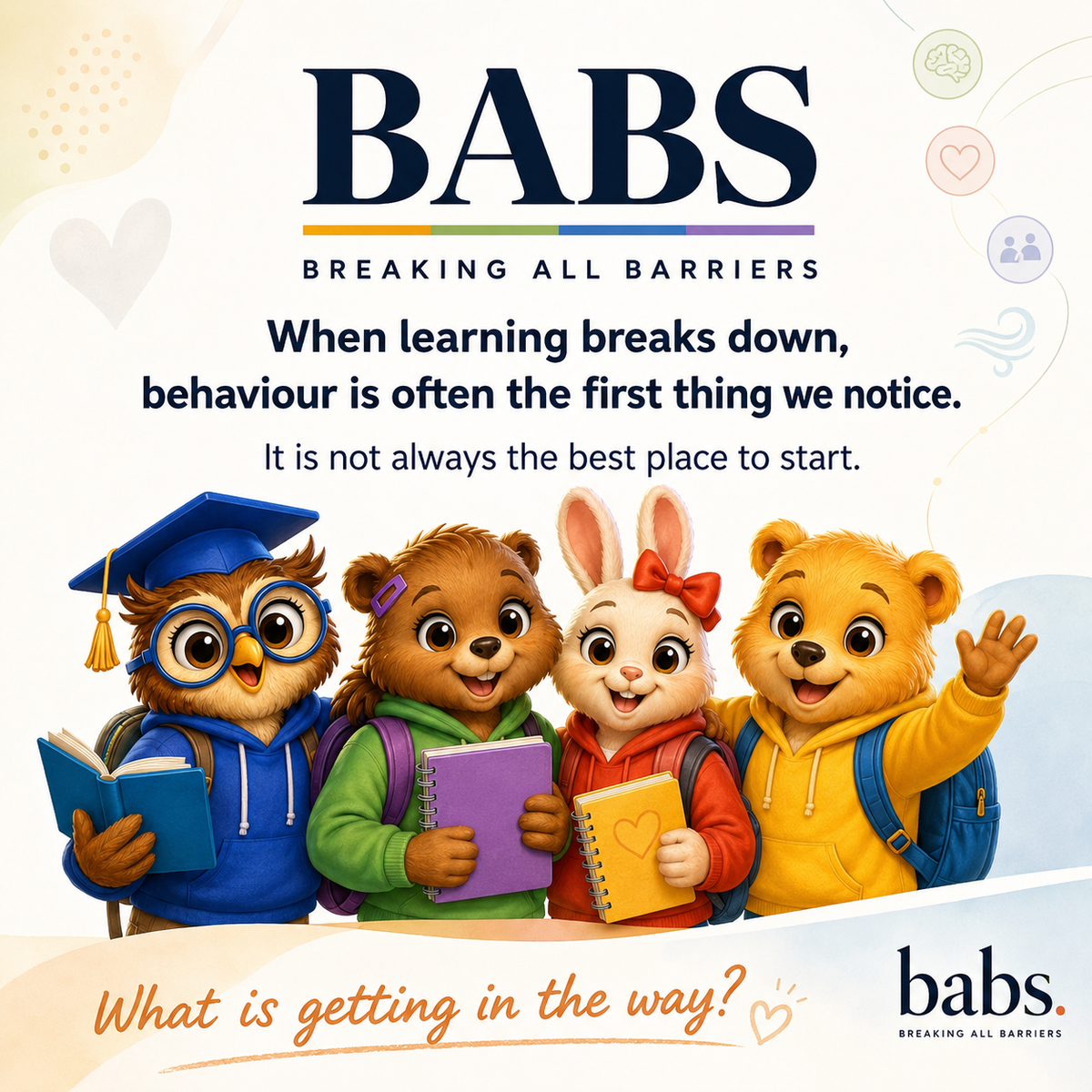
This is one of the reasons we created BABS, Breaking All Barriers, and the Integrated Brain Classroom™.
Lauren Kyte, Kate La Trobe and I had each been looking at this from a different part of a child’s world.
Lauren brought her early years experience and her work with NBI thinking preferences. Kate brought behaviour analysis, regulation and executive functioning. I brought years in classrooms, years as the parent of a neurodivergent child and more school meetings than any reasonable person should have to attend in one lifetime.
We wanted to know what might change if the adults around a child understood not only what the child was doing, but what might be happening beneath it. More importantly, we wanted the child to understand it too.
Calm. Think. Learn.
The Integrated Brain Classroom brings together three areas that are still too often handled separately: regulation, thinking and teaching.
The words are simple because children and busy adults need language they can remember and use. The thinking behind them is deeper.
Calm asks what the child’s brain and body need in order to become ready enough to engage.
That does not mean perfectly still, perfectly quiet or entirely free of emotion. A room full of perfectly calm children would be rather unnerving.
It means noticing whether the child needs movement, connection, clearer information, more structure or time to settle before we add another demand.
Think asks how the child naturally processes information and approaches problems.
Some children need to understand why. Some need a clear order. Some learn through connection and discussion. Others need to try, test and discover.
These are not boxes. No child should be reduced to a character, colour or profile. They are starting points that help us make better choices.
Learn asks what the adult can change about the route into the task.
The learning goal may remain exactly the same. The way we help the child reach it may need to change.
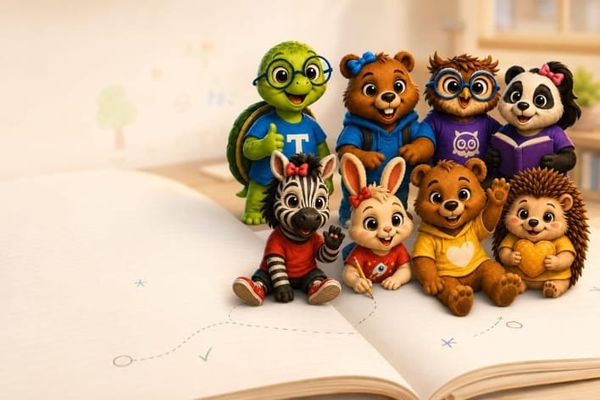
The Brain Friends™ give children accessible language for different ways of thinking and learning. The Calm Crew™ helps them name what they may need in a particular moment.
The characters matter because children remember stories and relationships more easily than they remember frameworks, and that familiar language gives them a way to explain experiences for which they may not yet have formal words.
A child may not be able to explain executive-functioning load, but they may be able to say that they need Toby to help them make a plan. They may not know the term sensory dysregulation, but they may recognise that Ziggy’s movement could help. They may not be able to describe a processing mismatch, but they may know they need Ollie to help them understand.
This is not cute language pasted over a serious problem. It gives children access to their own internal experience and gives adults a common way to respond.
The same child should not have to start again every time they move between the classroom, home and professional support. Useful understanding should travel with them. The language should make sense to the child as well as to the adults. Support should not depend entirely on whether one particularly insightful teacher happens to notice what everyone else has missed.
Understanding does not mean explaining away every behaviour.
Children still need boundaries. They still need to learn how their actions affect other people. They still need to recover from mistakes, return to tasks and do things they would prefer not to do, which remains one of the less glamorous features of both school and adulthood.
Understanding simply gives us a better chance of responding to the actual difficulty and gives the child a better chance of helping us solve it.
Instead of adults endlessly discussing the child, the child begins to develop language for themselves. They can notice what is happening, ask for what they need, reflect on what helped and understand that needing support does not mean there is something wrong with them.
This is the part of the Integrated Brain Classroom that matters most to me.
A child who understands how they regulate, think and learn is not only better prepared for the next worksheet. They are better prepared to advocate for themselves in the next classroom, the next friendship, the next difficult conversation and eventually the wider world.
Today, we are launching the BABS website and bringing this work together publicly for the first time.
There are spaces for schools, families and professionals because children do not live in one room, and useful understanding should not remain there either.
The child sitting in front of the open book may still need to complete the work. They may simply need help understanding why they are stuck, what might help and how to find the first step.
Explore BABS and the Integrated Brain Classroom™ at breakingallbarriers.co.uk