The soul behind Sheldon

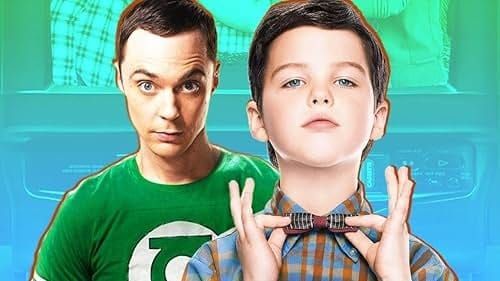
There are television characters you enjoy, and then there are the ones you recognise.
The first can make you laugh, quote lines, and carry a whole series on timing and charm alone. The second settle somewhere deeper. They remind you of children you have taught, children you have raised, children you have defended, and children you have watched the world misread over and over again. They feel less like writing and more like life.
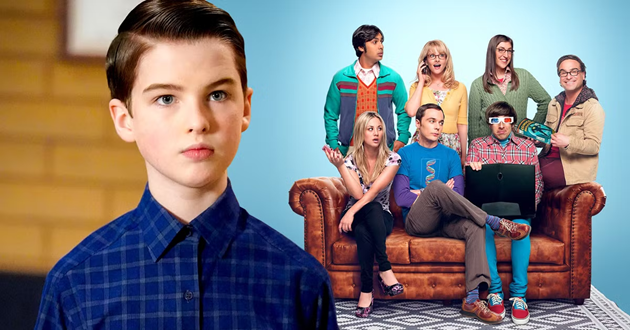
That, for me, is the difference between The Big Bang Theory and Young Sheldon.
This is not an attack on The Big Bang Theory. The show was clever, funny, and wildly successful for good reason. It knew exactly what it was doing. Its writing was sharp, its characters were memorable, and its comic machinery was beautifully built. But I never felt especially invested in them. I could admire the craft and still feel oddly outside it, as though I was being asked to enjoy a very polished set of types rather than step into the life of a fully inhabited person.
Then came Young Sheldon, and suddenly Sheldon had a pulse.
The same child who might once have been reduced to quirks, routines, rigidity, pedantry, and comic inconvenience became something much more recognisable: a profoundly gifted boy trying to survive a world that did not naturally fit him. He was still maddening. Still literal. Still socially out of step. Still capable of making everyone around him want to breathe through their noses and count to ten. But he was no longer just a collection of traits arranged for effect. He felt like a real child.
That is why he landed so differently.
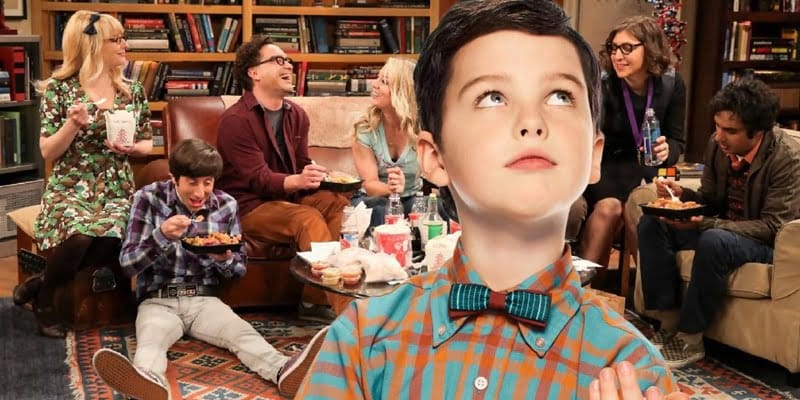
Children like Sheldon are often misunderstood in a very particular way. Their intelligence is so visible that adults assume the rest of them must be equally sorted. If a child can speak like a miniature professor, remember everything, and outthink most of the room, people tend to expect competence across the board. But gifted children are rarely that neat. They can be years ahead in one area and strikingly uneven in another. Brilliant, yet rigid. Insightful, yet socially bewildered. Impressive on paper, but far more fragile in real life than people are prepared for.
Sheldon feels real because he captures that contradiction so well. He is the epitome of the high-functioning gifted child: the one adults love to point to as extraordinary, while missing how much strain sits underneath the performance. The dazzling intellect is easy to admire. The intensity, the inflexibility, the social bluntness, the fixation on precision, and the sheer effort involved in moving through ordinary life are rather less charming once you are the one living alongside them.
That is where Young Sheldon feels truer to me. It understands the odd loneliness of the child who is clever enough to impress adults but not easy enough to fit their expectations. The child whose strengths are obvious, and whose struggles are therefore brushed off as attitude, fussiness, arrogance, oversensitivity, or yet another one of his little ways. In other words, the child everyone notices, but not everyone truly sees.
And once you have known a few real Sheldons, you cannot unsee it.
You start noticing how often bright, unusual children are flattened into shorthand. They are too much, too sensitive, too rigid, too intense, too obsessed, too socially awkward, too something. Adults often notice the friction long before they recognise the wiring underneath it. A child can be clearly exceptional and still be treated mainly as a problem to be managed. In fact, some children are treated that way because they are exceptional. Giftedness is much easier for the world to celebrate when it arrives gift-wrapped in charm, compliance, and school certificates. It is less popular when it comes muttering facts, correcting your wording, refusing the group activity, and unravelling because the plan changed.
That child is very easy to turn into a stereotype.
And that, I think, is why Young Sheldon landed so differently for me. It did not sand him down into a heartwarming little prodigy, which would have been unbearable. Nor did it make him a walking punchline in tiny trousers. It let him be brilliant, exasperating, funny, lonely, sincere, oblivious, occasionally intolerable, and deeply human. Which, to be fair, is how many children actually are. Not one thing. Not a diagnosis in a bow tie. Not a lesson. Not an inspirational poster for the staff room. Just gloriously, inconveniently human.
It also gave him a family that felt real enough to count. Not perfect, not endlessly patient, and not written in that saintly television-parent register that makes ordinary mothers want to throw something soft but pointed at the screen. His family loved him, but they did not always know what to do with him. That felt honest. Most families are not struggling because they do not care. They are struggling because care and understanding do not arrive as a neat matching set. Love does not hand you a manual, especially when the child in front of you does not resemble the one you thought you were getting.
That is something neurodivergent families know in their bones.
The child the world reads as rude may be anxious, overwhelmed, or operating with a level of literalness that makes social niceties feel like a second language. The child who looks controlling may be trying desperately to create safety. The child who corrects everyone at the table may not be trying to win. He may simply be unable, in that moment, to let an error pass because his brain has latched onto it like a terrier with a trouser leg. None of this makes family life easy or adorable. It just makes it real.
That is also why stories like this stay with us. Not because television must turn into educational theatre with a side of moral uplift, and not because every eccentric character needs to carry the full burden of representation while solemn music swells in the background. Heaven spare us. We are allowed to laugh. Some of these children are genuinely hilarious. But the best stories do more than point and snigger. They leave room for tenderness. They remind us that the traits people mock are attached to a whole person, and that the whole person is usually carrying more than anybody can see from the outside.
I think that is the soul I found behind Sheldon.
Not perfection. Not sentimentality. Not some tidy lesson about celebrating difference while everybody learns something wholesome before the credits roll. Just depth. Context. Humanity. The sense that behind the routines, fixations, and social misfires was a child trying, in his own strange determined way, to make sense of a baffling world.
That is a child many of us know.
Sometimes he is in your classroom, alienating half the group before break and dazzling you by lunch. Sometimes he is your own child, simultaneously exhausting and extraordinary. Sometimes he grows up into the adult people still describe as a bit much, because apparently society remains startled by the existence of an intense person with specific interests. Sometimes he is all of these things at once.
The Big Bang Theory gave us a character people could laugh at with affection. Young Sheldon gave us someone we could care about.
That, for me, is the difference.
One was a great sitcom. The other felt lived in.