Frankie Heck and the grief nobody mentions


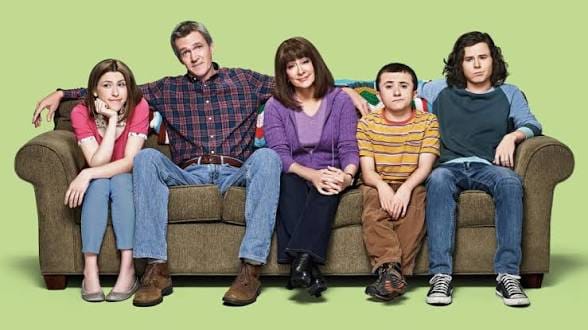
I ugly-cried at the final episode of The Middle. Not a quiet little tear. Not even a respectable cry. My face gave up entirely, my nose blocked, and I sounded like a wounded donkey. It was not my finest hour. The strange thing is, I should have expected it. For me, The Middle was a masterpiece of modern family dynamics, especially with neurodiversity in the mix. It got the texture right: the noise, the chaos, the misunderstandings, the affection, the guilt, and the way love and exhaustion can sit in the same room for years and both be completely real. And Frankie Heck. Good grief. Frankie was no glossy television mother who somehow manages to be calm, available and nicely lit at all times. She was frazzled, overextended, forgetful, loving and permanently worried that she was not doing enough. Which, for many mothers, is familiar enough. For mothers of neurodivergent children, it is almost uncomfortably so.

Because raising these children is never simple. It is parenting plus advocacy, detective work, emotional triage, and trying to explain to people that your child is not being difficult on purpose, while also wondering whether you packed the right snack, signed the form, remembered the headphones and misread that look in their eye ten minutes ago. It is school emails, waiting lists, endless second-guessing and that peculiar ability to sense trouble from the sound of your child putting down a spoon in the next room. You do it for long enough and it stops feeling like something you do. It starts feeling like who you are. That is the part I do not think people talk about enough. There is a lot of conversation around diagnosis, support needs, school challenges and therapy. As there should be. There is far less honest conversation about what happens later, when your child starts growing beyond the hardest years and you are still internally braced for impact. You think relief is coming. You imagine that when things ease, even a little, you will finally exhale and float gracefully into the next season of life. That is not quite how it works. What can happen instead is that your child needs you differently, and although there may be relief from many of the constant complications, you feel oddly bereft. Freer in some ways, yes. Proud too. But also anxious, displaced and strangely sad. It is a horrible little cocktail. This is not because you want your child to stay dependent. Any mother who has fought for her child’s growth knows exactly how absurd that idea is. Of course we want them to become more capable, more settled, more themselves. We have worked for it, hoped for it, prayed for it, and dragged ourselves through years of stress to help make it possible. When so much of your identity has been built around monitoring, translating, buffering and holding things together, change can feel far more complicated than people expect. Who are you when the child who needed you so intensely no longer needs you in quite the same way? And did you do enough while you were in it? That question, I suspect, haunts a great many mothers. Did I do enough? It changes shape over the years, but it never really leaves. In the thick of things it sounds like: Am I missing something? Should I be pushing more? Protecting more? Investigating more? Later, when the dust settles a little, it turns into something quieter and worse. Did I handle that properly? Did I overlook something important because I was exhausted? Did I do too much? Too little? Did I help, or was I just permanently improvising with coffee, adrenaline and maternal guilt?
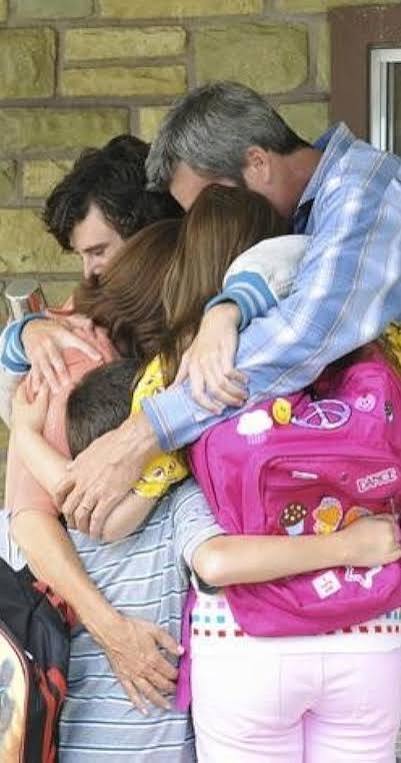
Neurodivergent parenting has a way of making everything feel loaded. School is never just school. A bad day is never just a bad day. A refusal is never just a refusal. A meltdown is never just a meltdown. There is always history underneath it, and context, and stress, and a hundred small things that other people do not see. You spend years learning to read between the lines because the lines themselves are rarely enough. That kind of parenting sharpens you. It also depletes you. You become the person who knows which teacher means well but will still make things worse, which sound is fine and which one is absolutely not, and which battles matter and which ones will simply chew through what little strength you have left. You become expert in things you never wanted to specialise in: reports, labels, school fit, regulation, hidden distress, public meltdowns, private recovery, carrying on. And while all of that is happening, life keeps moving. The child grows. That is the part that catches you off guard. This is not because you do not see it happening. You have just been so busy coping that you have not always had time to feel what the coping has cost. Then one day, there he is. Older. More solid. More fully himself. Still complicated, still human, still far from some smug little before-and-after story, but undeniably further on than he once was. And you are proud, of course you are. There is grief too. Grief for the years when everything felt so hard. Grief for the child who carried so much. Grief for the version of you that lived on high alert for so long she forgot there might be another way to be. That is why Frankie got me. Because beneath the humour, The Middle understood something painfully true. This kind of motherhood does not end neatly. There is no clean line where the hard years are over and the mother suddenly becomes relaxed, available for brunch and spiritually healed. The watchfulness does not vanish. The guilt does not vanish. The love certainly does not vanish. They simply have to find new places to go. And that is not always graceful.
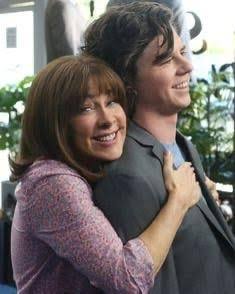
Sometimes it looks like crying at television because a fictional mother has accidentally put her finger on the exact thing you have not been able to name. For me, that thing was this: when your child’s struggles have shaped the emotional climate of your whole life, you do not automatically know who you are once the weather begins to change. It is the aftershock of years spent loving under pressure. I think many mothers of neurodivergent children know this feeling far too well. We are grateful when things improve, and we are proud when our children grow. There is often a quieter truth sitting alongside those things. Your child’s progress does not instantly undo your exhaustion. You may have spent so many years being needed in very particular ways that the change itself feels disorientating. Part of you is still standing in the old years, ready to advocate, explain, intervene and catch whatever is about to fall. That part does not retire politely. And maybe that is why so many mothers get ambushed by emotion at the oddest moments. A school concert. An old photo. A random memory in the car. A sitcom finale. The feelings do not line up neatly and present themselves at a convenient time. They bide their time, then arrive when you are least prepared and have no tissues nearby. Rude. Still, I am oddly grateful for what The Middle stirred up in me. It gave shape to something I think many of us carry without naming properly. The sadness of children growing up is part of it, yes. So is the strange grief of a mother whose identity has been built around surviving, helping and holding, and who is now being asked to loosen her grip while still hoping she got it right. I do not know that mothers ever get a fully satisfying answer to that question. We can give our children years of care, sacrifice, adaptation and fierce love, and still lie awake thinking about something we said in the car in 2016. But I do know this. Children do not need perfect mothers. They need mothers who learn them. Mothers who stay. Mothers who keep showing up. Mothers who keep trying to understand what is underneath the obvious thing. Mothers who apologise when they get it wrong and fight when it matters. That kind of love may not feel tidy or triumphant. It may look more like tired eyes, a blocked nose, coffee gone cold and one more school email drafted at 10pm. But it counts. Sometimes, I think it counts more than anything. So yes, I cried at The Middle. Spectacularly. Without dignity. And I suspect I was crying for far more than Frankie Heck. I was crying for the mothers who have spent years holding children through storms nobody else fully saw, for the women who became experts in their child’s distress and forgot to notice their own, for that strange, tender stage when the child is growing forward and the mother is still catching up, and for the hope, still there under everything else, that despite all the muddling through, the exhaustion and the endless fear of getting it wrong, love did its job.